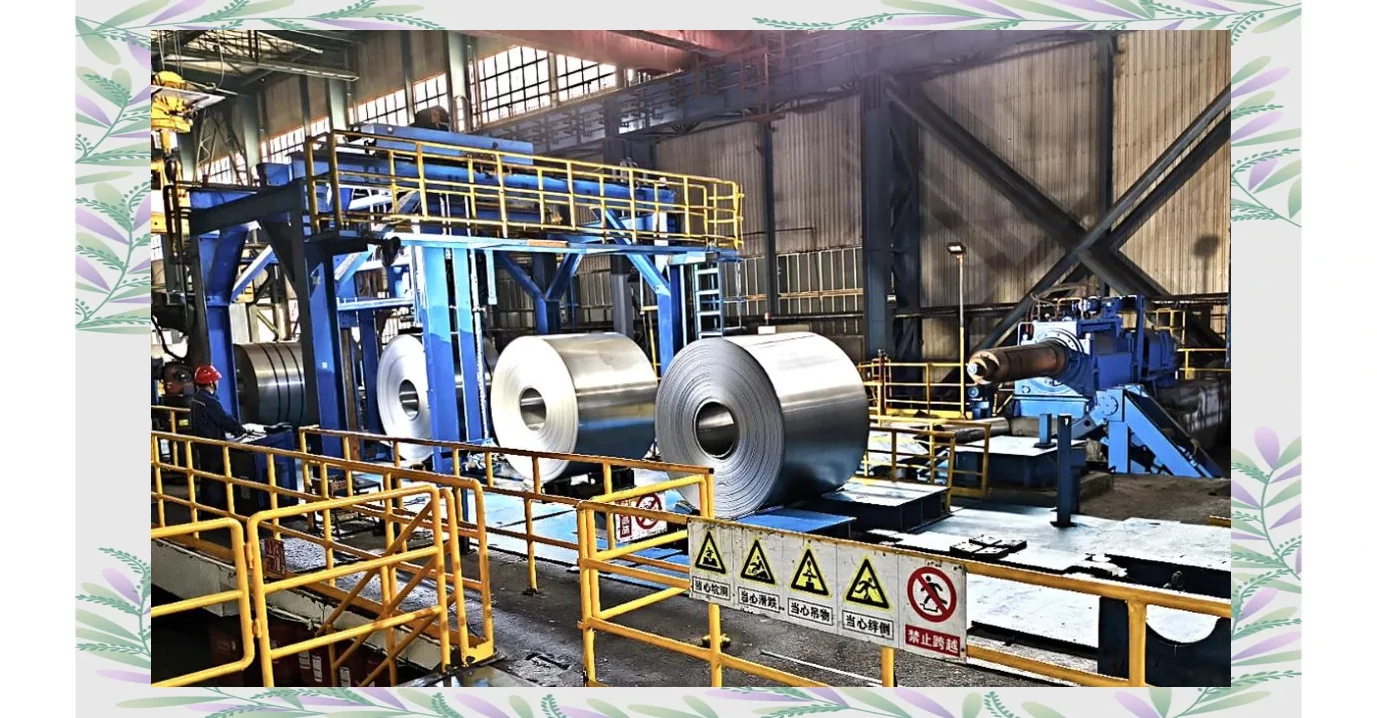
Choosing steel for precision fit or heavy-duty forming comes down to process. Hot rolled steel is formed above ~1,700°F (927°C), yielding lower residual stress, looser tolerances, and a mill scale surface—ideal for beams, plate, and general fabrication where cost and formability matter. Cold rolled steel is reduced below the recrystallization temperature, resulting in tighter gauge/flatness control, smoother finish, and higher yield strength for precision parts, painted panels, and stamped components.
rolled steel Scopes including coil, sheet, plate, and bar in carbon and stainless grades; not covering heat-treated alloys or specialty polished finishes. For purchasing and QA teams, a practical data point: cold rolled sheet (per typical ASTM A568/A480 production) delivers roughly 15–25% higher yield strength than equivalent hot rolled material due to work hardening. Use hot rolled vs cold rolled steel as a cost-performance lever—select hot rolled for structural mass and forming latitude; choose cold rolled for dimensional accuracy and surface-critical work.
What's The Difference Between Hot And Cold Rolled Steel?
Cold Rolled Steel

Cold rolled steel is selected for precision fit, uniform strength, and a clean, paint-ready surface. Processed below the recrystallization temperature, it uses reduction passes, controlled annealing cycles, and a final skin-pass to tighten gauge/flatness and improve surface gloss. Common CRS material grades 1008/1010/1018 are low-carbon (≤0.20% C) for predictable forming and machining.
Performance & standards: compared with hot rolled steel, cold rolled sheet metal holds tighter thickness control (≈±0.0015 in typical production) and delivers ~15–25% higher yield strength through work hardening; supplied per ASTM A1008 (carbon) and produced alongside ASTM A1011 HR feedstock. Tempers include full-hard, half-hard, and annealed for different forming depths.
Use cases: automotive inner door panels (e.g., OEMs spec CRS 1010 for stable stamping), appliance shells, office furniture, tubing and enclosures that need smooth finishes. In stainless applications, the same cold rolling principles apply to 304/430 under ASTM A480 for controlled 2B finishes. For buyers, cold rolled steel sheet and cold rolled metal combine dimensional accuracy with coating-friendly surfaces.
Hot Rolled Steel

Hot rolled steel is the standard choice for structural strength, weldability, and cost efficiency in large-scale fabrication. Produced above 1,700°F (927°C), hot rolled steel material is shaped while red-hot, allowing greater deformation and fast throughput. This high-temperature process leads to looser dimensional tolerances and a dark mill scale layer, which can later be removed by pickling or sandblasting for coating or painting.
Common HRS steel grades—A36, A1011, and A572—contain approximately 0.20–0.25% carbon, balancing ductility and toughness. According to ASTM A1011/A36, typical yield strength ranges from 36,000 to 60,000 psi, depending on thickness and grade. Hot rolling also refines grain structure, giving the metal uniform mechanical behavior ideal for welding and bending operations.
Applications of Hot Rolled Steel:
Structural beams, columns, and base plates
Heavy machinery frames, rail components, and farm equipment
Coil or plate stock for downstream fabrication and service centers
In stainless processing, similar hot rolling methods precede pickling and annealing steps, ensuring a consistent grain structure in grades such as 304 and 316. For buyers comparing hot rolled vs cold rolled steel, hot rolled metal sheet offers lower cost per ton and excellent performance where surface finish is less critical.
Hot rolled vs cold rolled steel differs primarily in processing temperature, dimensional accuracy, and surface finish—factors that directly affect performance and cost. Hot rolled steel is formed above the recrystallization point (around 1,700°F / 927°C), giving it easier formability and lower cost per ton. Cold rolled steel, processed at room temperature, provides tighter tolerances, smoother surfaces, and up to 25% higher yield strength due to work hardening.
| Property | Hot Rolled Steel (HRS) | Cold Rolled Steel (CRS) |
|---|---|---|
| Process Temp | ~1,700°F (927°C) | Below recrystallization |
| Surface Finish | Scaled, rough | Smooth, bright |
| Dimensional Tolerance | ±0.01–0.03 in | ±0.0015 in |
| Typical Strength | 36–60 ksi | 45–75 ksi |
| Common Standard | ASTM A1011/A36 | ASTM A1008 |
| Key Use | Structural frames, heavy fabrication | Automotive, appliances, precision parts |
In practice, hot rolled steel sheet is preferred for beams, plates, and welded frames where finish isn’t critical, while cold rolled sheet metal dominates parts requiring coating, painting, or tight dimensional control. For manufacturers, choosing between hot rolled vs cold rolled strength depends on whether cost efficiency or precision is the operational priority.
Mechanical and Processing Differences

The mechanical gap in hot rolled vs cold rolled steel comes from process temperature and strain hardening. Cold rolled steel delivers tighter tolerances and higher strength—typically +15–25% yield strength with ~120–160 HB for CRS 1018 (Brinell per ASTM E10)—making cold rolled steel sheet ideal for precision stampings. Hot rolled steel, formed above 1,700°F (927°C), offers ~20–25% elongation and excellent weldability, suiting bending and structural fabrication.
Processing & finishing :
HRS to ASTM A1011/A36: often pickled and oiled (P&O) to remove mill scale for better coating and welding.
CRS to ASTM A1008: frequently galvanized/electro-galvanized or phosphated for paint adhesion and corrosion control.
In practice, fabricators choose pickled hot rolled metal sheet for cost-sensitive forming, while galvanized cold rolled sheet serves automotive, appliance, and enclosure parts requiring precision and durability. These property and finishing differences typically drive purchasing specs and QA criteria in OEM and service-center contracts.
Choosing between hot rolled and cold rolled steel comes down to the balance of precision, strength, and cost efficiency. Knowing their mechanical and processing differences helps you optimize performance, cost, and long-term reliability.
In CHC, a professional stainless steel manufacturer delivering hot rolled and cold rolled steel solutions to spec—contact CHC for technical consultation or tailored supply options.